


Nuremberg Old Town: Walking Tour with Local Stories & Dürer’s House



Summary
Wander medieval lanes, meet locals, see Dürer’s world and taste Nuremberg’s layers
You’ll follow a Nuremberg local through winding medieval streets, touch the lucky ring at Schöner Brunnen, step inside Albrecht Dürer’s House, and hear stories that bring both tragedy and resilience alive. Expect laughter, honest conversation, and small details you’ll remember long after you’ve left those cobbles behind.

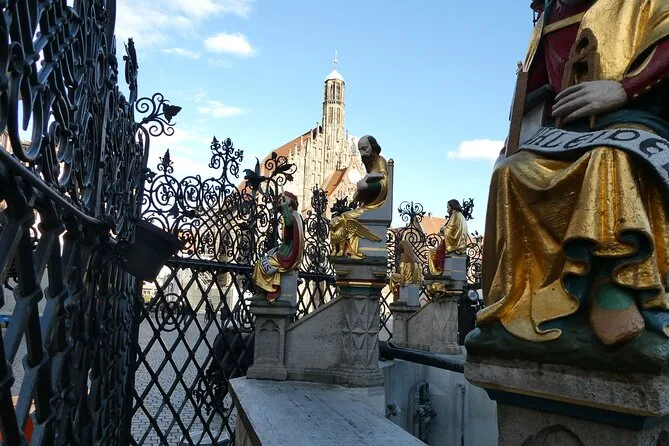
The first thing I noticed was the way the cobblestones felt under my shoes—worn smooth in some places, uneven in others. Our guide, Anna, waved us over by the Beautiful Fountain (she called it Schöner Brunnen but didn’t mind my clumsy German). She handed out a little story about the golden ring on the fountain—everyone was touching it for luck. I caught a whiff of roasted nuts from a nearby stall and almost lost track of what she was saying about the legend behind it. Sometimes you just have to let your senses win.
We wandered past market stalls where locals were arguing gently over fruit prices—one man laughed and shrugged at me when I tried to guess what “Zwetschgenmännla” meant. The Main Market Square buzzed with people but didn’t feel rushed, somehow. Anna pointed out details on the Frauenkirche that I’d never have noticed alone—the faces carved above the doors, little bits of history hiding in plain sight. She had this way of mixing facts and family stories; at one point she mentioned her grandfather remembering the city after WWII and how rebuilding gave everyone hope again. That stuck with me more than any date or name could.
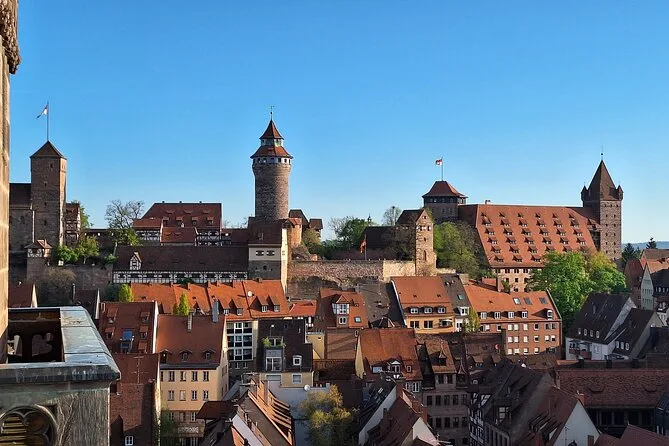
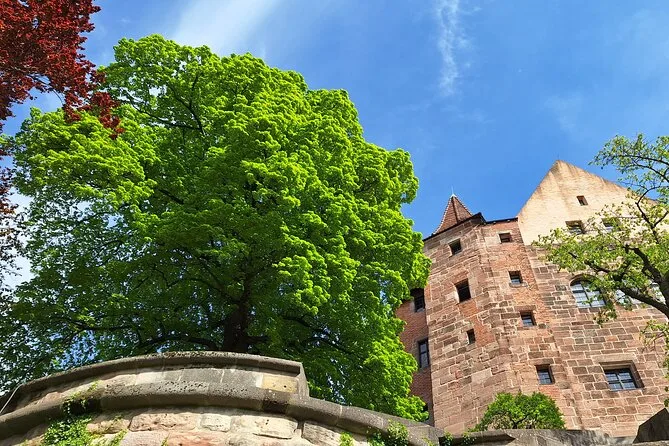
I still think about standing up by Kaiserburg, looking down over red roofs and church spires—wind picking up just enough to make me zip my jacket. We ducked into Albrecht Dürer’s House, creaky floorboards and all; Anna joked that even geniuses probably stubbed their toes on those stairs. There was something grounding about seeing where he worked—like art wasn’t just for museums but belonged right here in these old walls.
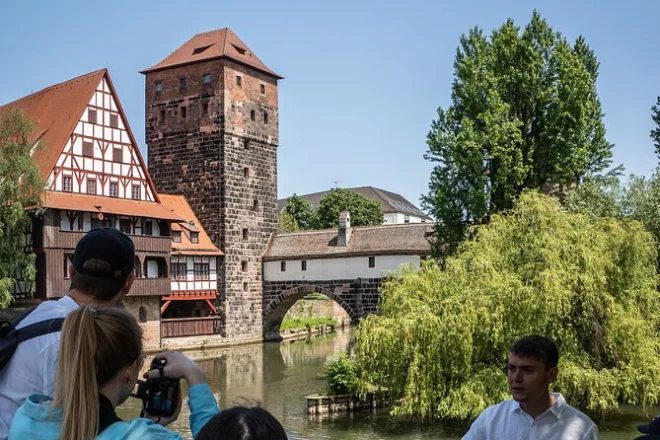
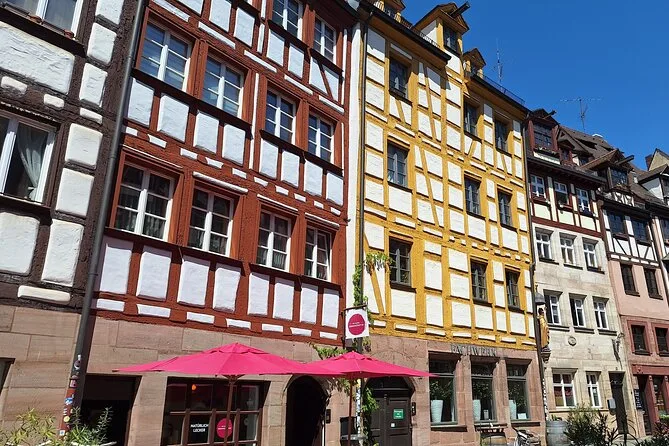
By the time we reached Tiergärtnertorplatz and that half-timbered street (I can never remember its name), my feet were tired but my head was full. Anna finished with restaurant tips and a few words about Franconian beer—I wrote them down but probably spelled them wrong. Anyway, if you want to really feel Nuremberg’s old town—not just see it—I’d say walk it like this, with someone who grew up tracing these same stones.
 2h 30m

Step-by-step itinerary
Day 1 — Explore Nuremberg's medieval highlights
- Visit Beautiful Fountain
- See Frauenkirche church
- Explore Hauptmarkt square
- Tour Nuremberg Castle
- Visit Albrecht Dürer's House
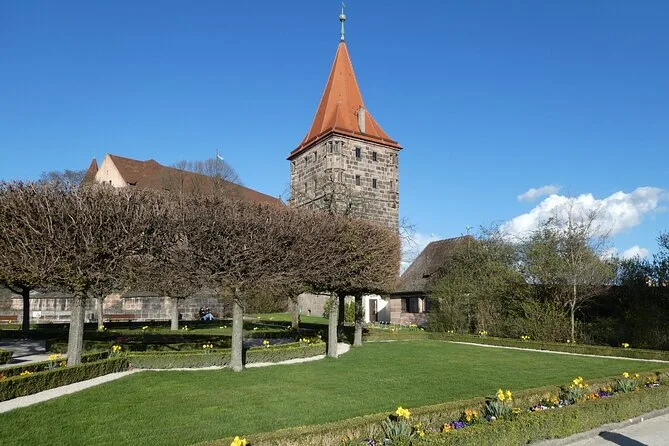
- View 14th-century defensive tower
- Walk craftsmen's street

Top questions

How long does the Nuremberg walking tour last?
The walking tour lasts approximately 2.5 hours.
Is the Nuremberg Old Town walking tour wheelchair accessible?
Yes, the tour is wheelchair accessible and suitable for all fitness levels.
Does the tour include entry to Albrecht Dürer’s House?
The tour visits Albrecht Dürer’s House from outside; entry details may vary so check in advance if you wish to go inside separately.
Are children allowed on this walking tour?
Yes, infants and small children can join; strollers are welcome.
What main sights are covered on this Nuremberg walking tour?
You’ll see Schöner Brunnen (Beautiful Fountain), Main Market Square, Imperial Castle (Kaiserburg), Albrecht Dürer’s House, Tiergärtnertorplatz, and historic craftsmen’s street.
Is there a local guide for this Nuremberg Old Town tour?
Yes, your guide is born and raised in Nuremberg and leads the entire walk in English.
Are service animals allowed on this tour?
Yes, service animals are permitted during the walking tour.
Does this day trip start near public transportation?
Yes, public transportation options are available nearby for easy access to the meeting point.

What’s included
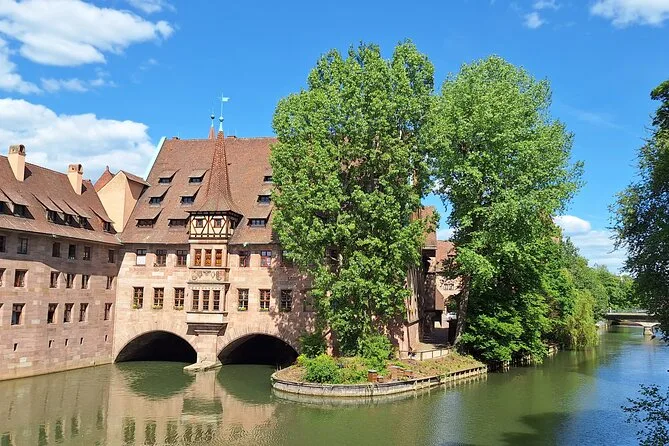
Your day includes a guided walking tour through Nuremberg Old Town led by an English-speaking native guide who shares personal stories alongside history. The route covers key landmarks like Main Market Square, Kaiserburg Castle, Albrecht Dürer’s House (outside), beautiful half-timbered streets and hidden corners—all within easy reach of public transport. Wheelchair users and families with strollers are welcome throughout.
 Super deal
  Free booking, free cancellation.
  Don't lose your place.


 Do you need help planning your next activity?


