


Kazbegi Day Tour: Ananuri, Gudauri & Gergeti Trinity Church
 10h–12h
 4.80
(46 reviews)
4.80
(46 reviews)






Summary
Georgia Military Road Adventure: Mountains, Castles & Local Flavors
If you're after mountain views, ancient castles, and real Georgian flavors all in one day—this trip packs it in without feeling rushed. You'll get local stories from guides who know every turn of the road and taste food that's part of Georgia's soul.

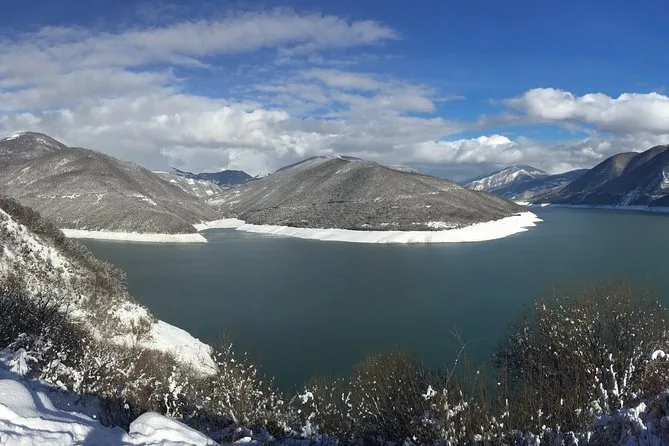
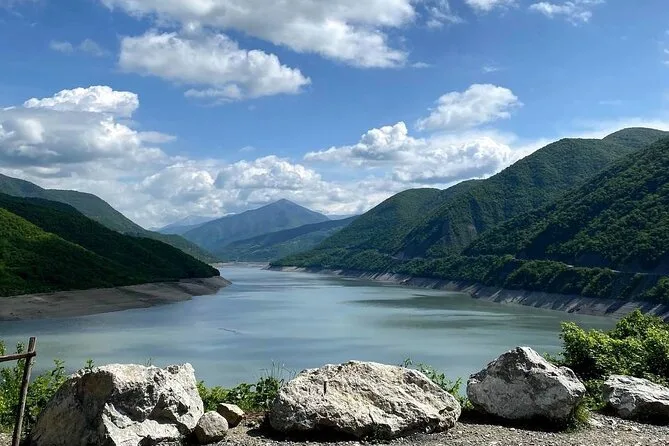
Mornings in Tbilisi can be a bit chilly, even in late spring. We set out early, winding north along the Georgian Military Road. Our first stop was Zhinvali Reservoir—locals call it Jinvali. The water looked almost unreal, this deep blue surrounded by green hills. There’s a tiny roadside stand where I grabbed a strong Turkish coffee; the smell mixed with fresh mountain air is something that sticks with you. If you’re lucky, you’ll catch the sun hitting the surface just right—it almost glows.
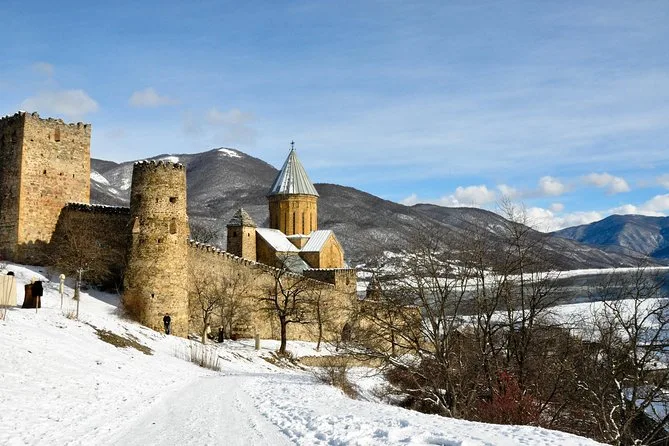
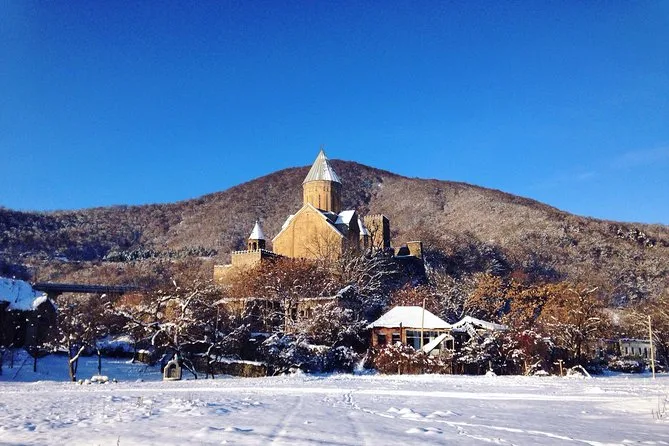
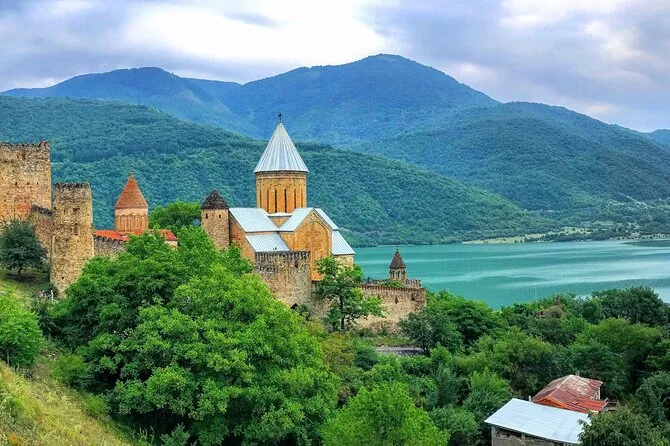
Not far up the road sits Ananuri Fortress. Our guide, Giorgi, knew every corner of these old stone walls. He pointed out carvings on the main church—lions and swirling patterns you’d miss if you weren’t looking closely. From the top of the watchtower, you get a view over Jinvali Lake that’s hard to forget. Sometimes there’s a breeze carrying hints of pine and wildflowers.
We made a quick stop at the spot where two rivers meet—one dark and one pale. It’s strange to see them swirl together but not mix right away. Locals say it’s good luck to toss in a coin here.
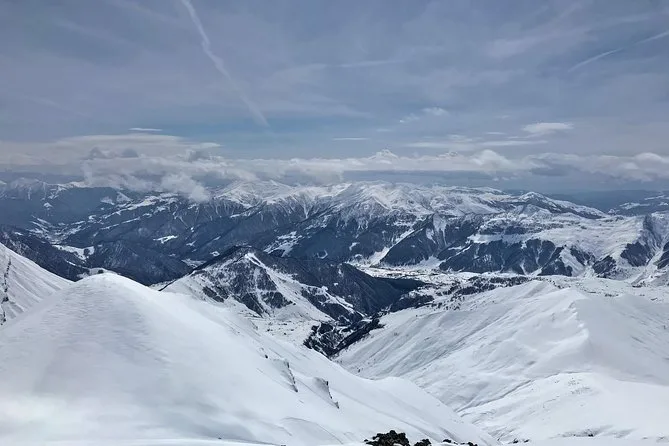
Gudauri came next—a ski resort most people know for winter sports, but even in summer it’s lively with hikers and paragliders. The cable car runs year-round if weather allows; we rode up for views that go on forever. At the top, it gets windy fast—bring a jacket even if Tbilisi felt warm when you left.
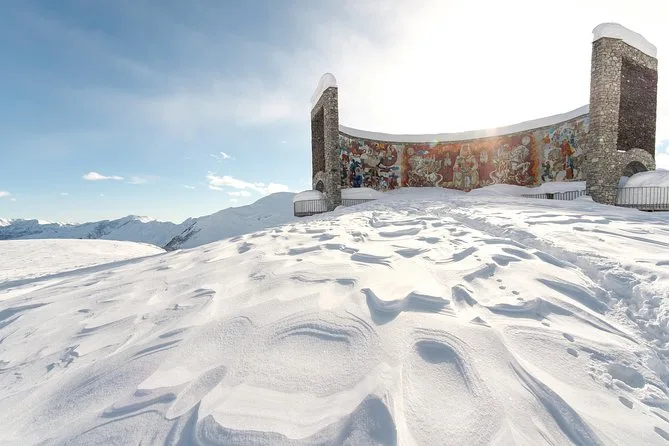
The Russia-Georgia Friendship Monument is hard to miss: bright murals curve along the edge of a cliff. Kids were selling homemade churchkhela (those nutty Georgian sweets) nearby—worth trying if you’ve never had one.
At Cross Pass, there’s a small fenced cemetery—a quiet place with faded crosses and stories our guide shared about prisoners who built this road decades ago. It’s somber but important history.
If it’s not winter, there’s also a mineral spring nearby where orange rocks have built up over ages from water trickling down the hillside. The smell is sharp—almost metallic—but locals swear by its health benefits.
Mount Kazbek dominates everything as you approach Stepantsminda. Clouds move fast here; sometimes you only get glimpses of its snowy peak before it disappears again behind mist.
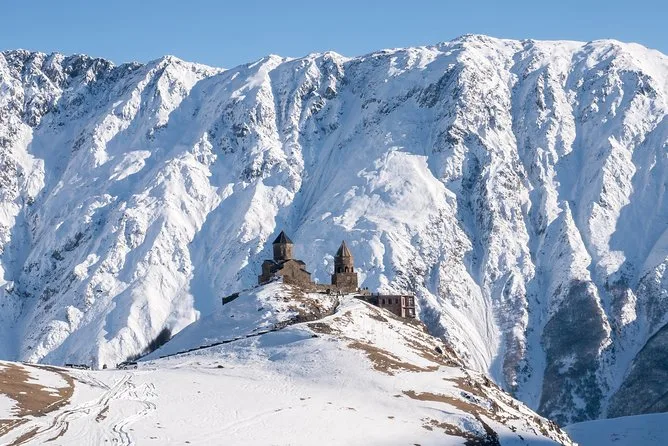
The real highlight for me was Gergeti Trinity Church perched high above town at 2,170 meters. You can hike up or take a bumpy ride—the climb is worth it either way for that feeling when you finally reach the top and see the church set against Mount Kazbek itself. The wind whistles around those old stones; inside it’s cool and dim, candles flickering quietly.
On our way back toward Tbilisi we stopped in Pasanauri village for dinner—this place is famous for khinkali dumplings (they say they invented them here). I tried lamb ones and some river trout grilled over coals; both tasted better after a long day outside.
10h–12h

Step-by-step itinerary
Day 1 — Kazbegi Region Full Day Tour
- Visit Zhinvali Reservoir and enjoy coffee
- Explore Ananuri Fortress
- See the confluence of two rivers
- Stop at Gudauri Ski Resort
- View Russia-Georgia Friendship Monument
- Pass by military cemetery at cross pass
- Visit mineral water source and rock formations
- Pass by Mount Kazbek peak
- Visit Gergeti Trinity Church
- Lunch in Pasanauri village (Khinkali birthplace)
- Return to Tbilisi

Top questions

Is hiking to Gergeti Trinity Church required?
Nope! You can choose to hike or take a car up depending on your preference or energy level that day.
Are there vegetarian options at the restaurant stop?
Yes—besides khinkali with meat, they usually offer cheese or potato versions plus salads and local breads.
What should I wear?
Dress in layers—it can be warm in Tbilisi but chilly or windy in the mountains, especially near Gudauri or Gergeti Church.
Is this tour suitable for kids?
Most families do fine! Just keep in mind some stops are at higher altitudes and car rides can be long between places.

What’s included
You’ll get bottled water along the way and plenty of chances to buy snacks or coffee at local stops. Guides share stories at each site so you won’t miss any details—even little ones like carvings or hidden viewpoints!
 Super deal
  Free booking, free cancellation.
  Don't lose your place.


 Do you need help planning your next activity?


