


Williamsburg: Black History Walking Tour & Stories of Freedom


Summary
Williamsburg’s streets echo with black voices past and present
You’ll walk Williamsburg’s historic streets with a local guide, hearing stories rarely told — from churchyard graves to courthouse steps and lives shaped by hope or injustice. Expect moments that make you pause and details that linger long after you leave.

You step off the curb in Colonial Williamsburg and it hits you — this place is layered. Our guide, Marcus, just nodded at the First Baptist Church and started talking about the graveyard out back. I’d never thought about who might be buried there before. There’s this quiet heaviness under the trees, like you can almost hear old hymns if you listen hard enough. Marcus said some days you can go inside the church (we couldn’t today — something about Mondays), but even standing outside felt like enough.
We shuffled along Duke of Gloucester Street, passing brick buildings that look almost too perfect. Marcus stopped us in front of what’s now a tavern — turns out it once held the first African American lawyer’s office here. He told us about its owner, how he broke through barriers nobody talks about in school. I tried to picture him walking these same cobblestones, maybe dodging glances or worse. The sun was hot on my neck and someone nearby was selling sweetgrass fans; I almost bought one just to have something to do with my hands.
At George Wythe’s house, Marcus lowered his voice and told us how Wythe’s own slaves uncovered a plot against him — I didn’t expect that twist. And then we reached the Governor's Palace, where Lord Dunmore once promised freedom to enslaved people who’d fight for the British. It’s strange hearing those stories while tourists snap photos in front of the gates. There was this moment where nobody said anything for a bit — just cicadas buzzing and shoes scuffing gravel.
I keep thinking about Mary Stith now — her story came near the end of our walk. She left her property to her freed Black servants, which Marcus said was “ahead of her time.” You could see he meant it. The courthouse at the end felt colder somehow; learning that bills of sale for enslaved people were signed right there made me uneasy in a way that stuck with me after we left. So yeah, this day trip through Williamsburg isn’t always comfortable, but maybe that’s kind of the point.
 2h
2h

Step-by-step itinerary
Day 1 — Explore African American history in Williamsburg
- Visit Historic First Baptist Church
- See first African American lawyer's office
- View George Wythe's home exterior
- Learn about Lord Dunmore's proclamation
- Discover slave ownership at colonial house
- Explore First Virginia Convention site
- Visit Mary Stith's property site
- See courthouse for slave sale records

Top questions

How long is the Williamsburg Black History tour?
The tour covers several key sites within Colonial Williamsburg; total duration depends on group pace but generally lasts around 2 hours.
Is there an inside visit to First Baptist Church?
The tour sometimes includes an inside visit on Monday, Wednesday, Friday, or Saturday if available; otherwise it remains outside.
Are children allowed on this tour?
Yes, infants and small children can join; strollers are welcome.
Does the tour include entry into all attractions?
No, most stops are outside only except for possible entry into First Baptist Church when available.
Is public transportation nearby?
Yes, public transportation options are available close to Colonial Williamsburg.
Are service animals allowed on this walking tour?
Yes, service animals are permitted throughout the experience.
Is lunch or food included during the tour?
No meals are included; food may be available from vendors along the route.
What physical fitness level is required?
The tour is suitable for all fitness levels but not recommended for those with poor cardiovascular health due to walking involved.

What’s included
Your day includes a thoroughly researched route through Colonial Williamsburg led by a professional guide sharing accurate history at each stop; infants in strollers and service animals are welcome along public paths throughout this accessible experience.
 Super deal 2h
  Free cancellation
 Don't lose your place.
  Real experiences from trusted providers


 Secure checkout on viator.com

Similar tours
 Williamsburg: Patriots Walking Tour & Colonial Stories Hour
★★★★★★★★★★ 4.85 (223) From US$ 25
Williamsburg: Patriots Walking Tour & Colonial Stories Hour
★★★★★★★★★★ 4.85 (223) From US$ 25
 Savannah: Historic Walking Tour with City Squares & Stories
★★★★★★★★★★ 4.86 (3204) From US$ 30
Savannah: Historic Walking Tour with City Squares & Stories
★★★★★★★★★★ 4.86 (3204) From US$ 30
 Lexington: Downtown Food Tour & History Walk with Lunch
★★★★★★★★★★ 4.95 (583) From US$ 105
Lexington: Downtown Food Tour & History Walk with Lunch
★★★★★★★★★★ 4.95 (583) From US$ 105
 Georgetown: History & Gossip Walking Tour with Local Stories
★★★★★★★★★★ 4.88 (387) From US$ 49
Georgetown: History & Gossip Walking Tour with Local Stories
★★★★★★★★★★ 4.88 (387) From US$ 49
 Savannah Historic District Walking Tour with Local Stories
★★★★★★★★★★ 4.89 (248) From US$ 46.16
Savannah Historic District Walking Tour with Local Stories
★★★★★★★★★★ 4.89 (248) From US$ 46.16
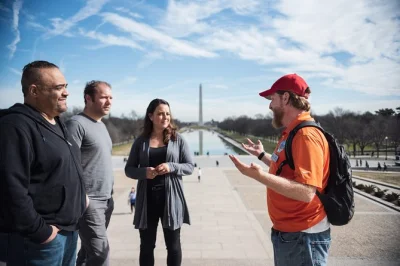 Washington DC: Monument Skip-the-Line & National Mall Walk
★★★★★★★★★★ 4.91 (226) From US$ 67.50
Washington DC: Monument Skip-the-Line & National Mall Walk
★★★★★★★★★★ 4.91 (226) From US$ 67.50
 Providence: Haunted History Walking Tour College Hill
★★★★★★★★★★ 4.96 (130) From US$ 30
Providence: Haunted History Walking Tour College Hill
★★★★★★★★★★ 4.96 (130) From US$ 30
 Salem: Kids Slightly Spooky Walking Tour & Witch House
★★★★★★★★★★ 4.91 (128) From US$ 20
Salem: Kids Slightly Spooky Walking Tour & Witch House
★★★★★★★★★★ 4.91 (128) From US$ 20
 Sitka Downtown Walking Tour: Russian Landmarks & Local Stories
★★★★★★★★★★ 4.63 (115) From US$ 49
Sitka Downtown Walking Tour: Russian Landmarks & Local Stories
★★★★★★★★★★ 4.63 (115) From US$ 49
 Charleston: Small Group History Walk with Citadel Professor
★★★★★★★★★★ 4.99 (1483) From US$ 40
Charleston: Small Group History Walk with Citadel Professor
★★★★★★★★★★ 4.99 (1483) From US$ 40
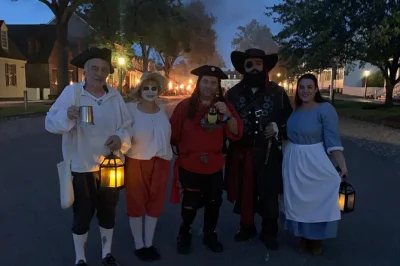 Williamsburg: Ghosts, Witches & Pirates Night Walking Tour
★★★★★★★★★★ 4.71 (606) From US$ 25
Williamsburg: Ghosts, Witches & Pirates Night Walking Tour
★★★★★★★★★★ 4.71 (606) From US$ 25
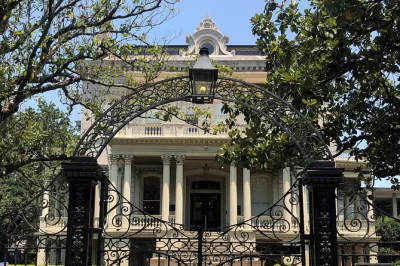 New Orleans: Garden District Walking Tour & Filming Locations
★★★★★★★★★★ 4.92 (539) From US$ 37
New Orleans: Garden District Walking Tour & Filming Locations
★★★★★★★★★★ 4.92 (539) From US$ 37


 Do you need help planning your next activity?


